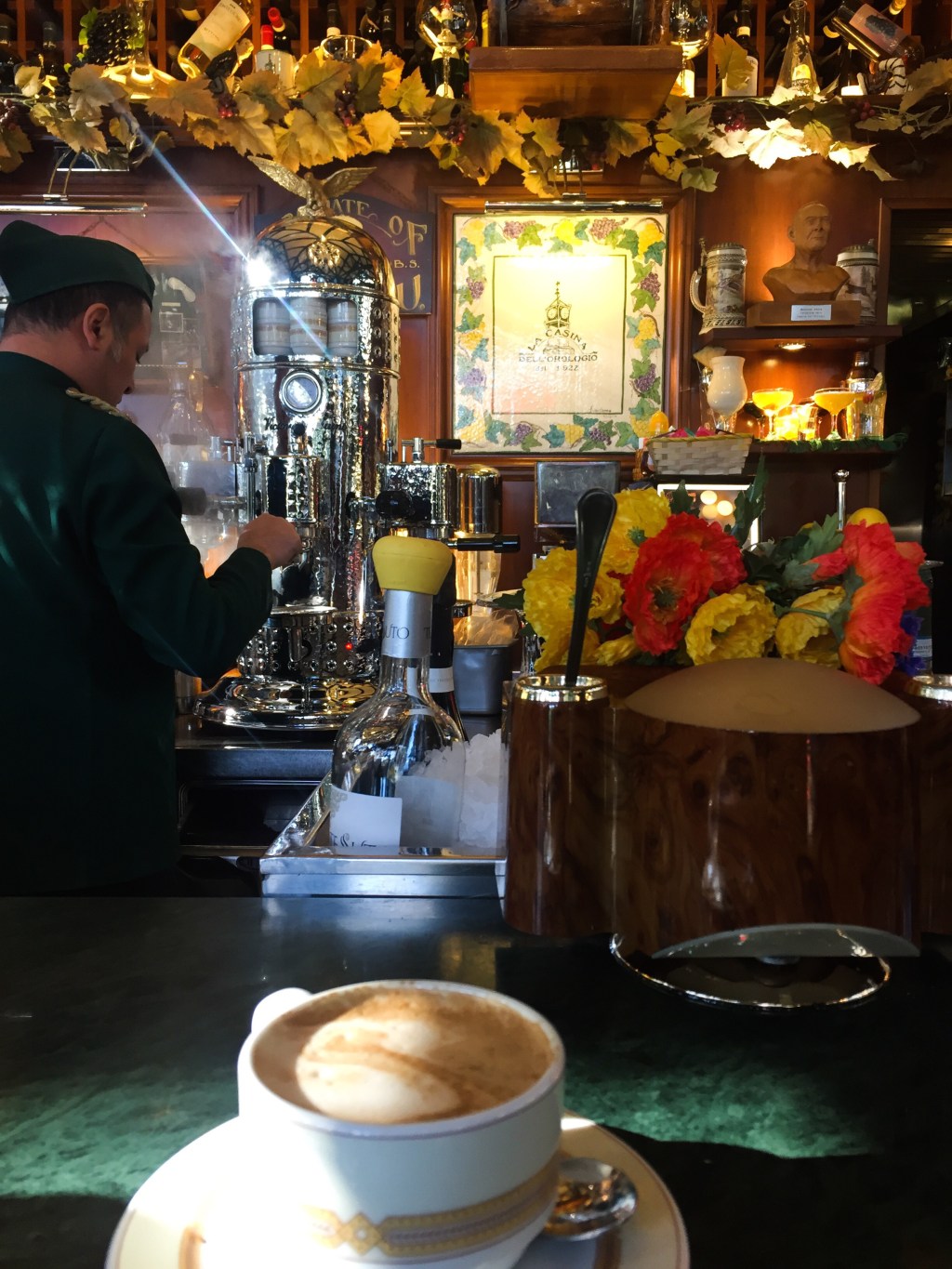
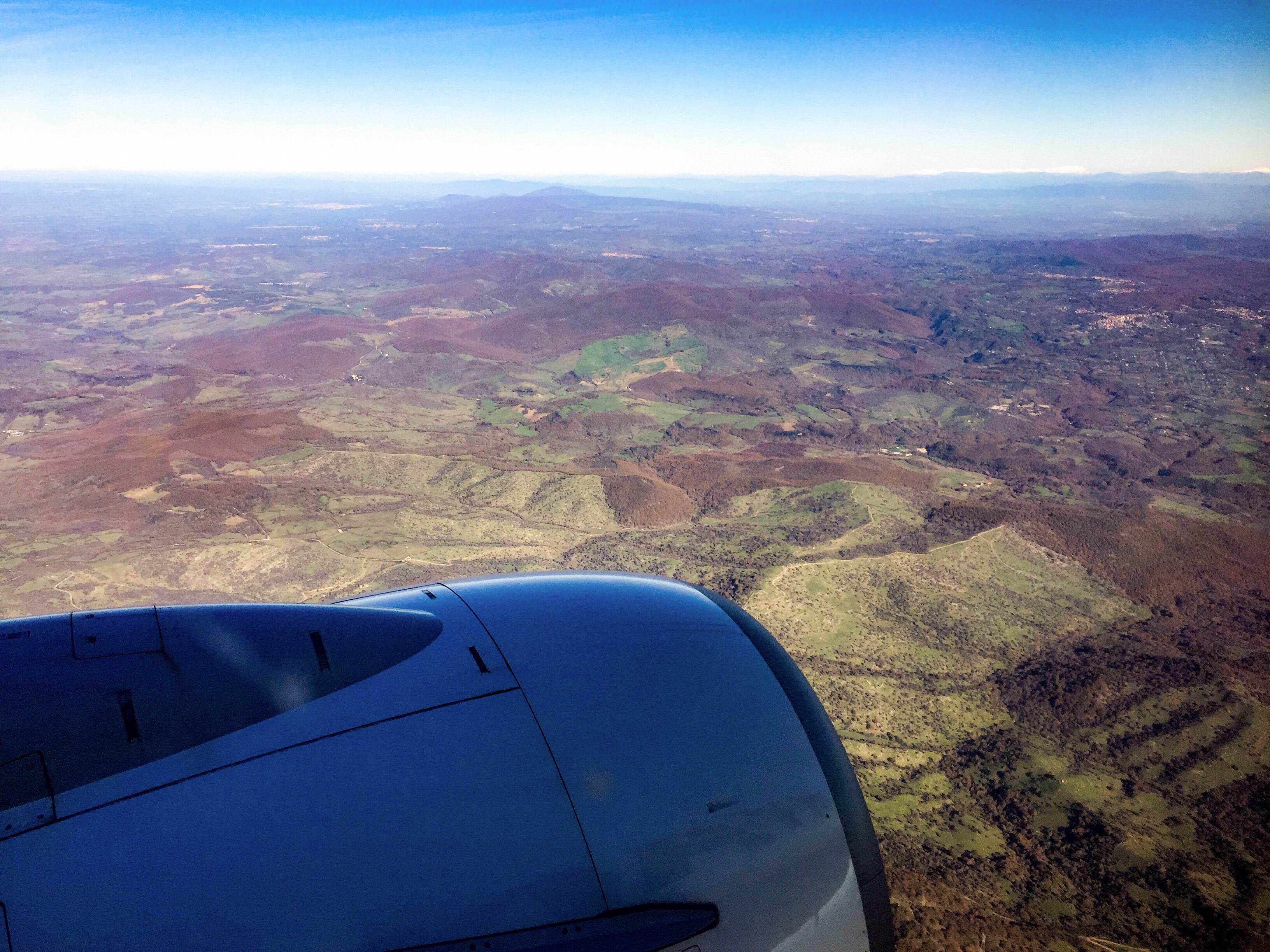
A month into my trip, I was craving a familiar landscape. I have wanted to return to Rome ever since I left two years ago, and walking from the train station to the Aventine Hill, where I lived for a semester, felt as natural as walking home.
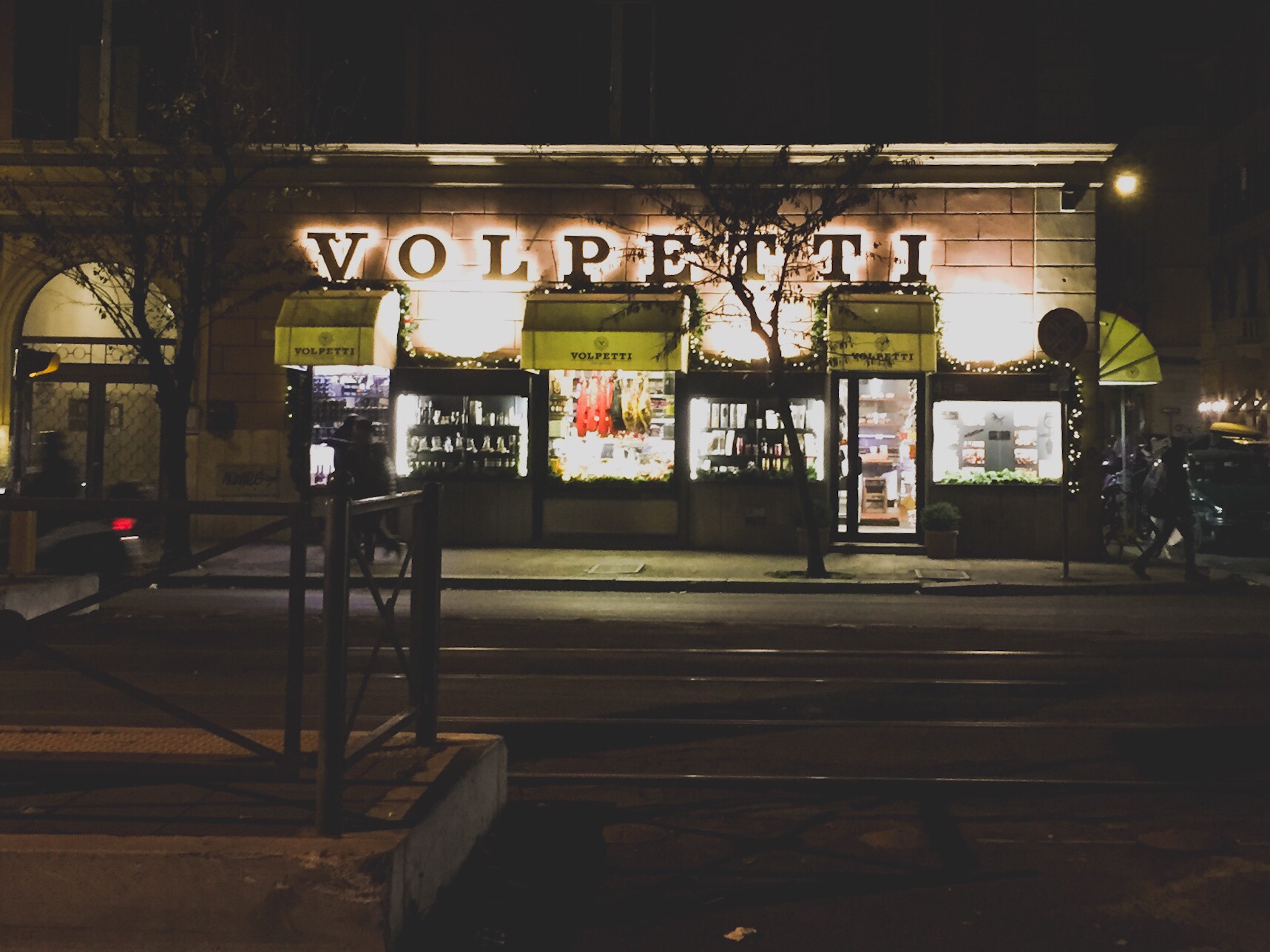
After settling into my hotel room, I went to my old favorite deli: Volpetti. Aleem, the deli man, recognized me immediately, so I asked him for the usual and, as usual, he fed me little snacks from behind the bar while he worked his magic: two thick slices of ciabatta bread filled with roast beef, pesto, goat cheese, balsamic, and olive oil. I left with a big smile and a precious parcel full of my favorite sandwich. But, due to a lack of self-control, half of it was gone by the time I made it back to my room.
I remember feeling anxious at the end of my semester abroad because I had not seen everything there was to see in Rome so I asked a friend who lived in the city if he felt that he had. He said that one couldn’t see everything even if they lived their whole life in Rome. On this trip, I accepted the futility of seeing it all so I slowed down, shortened my list of must-sees, and, in so doing, began noticing more details. I realized that every inch of the city has a story.
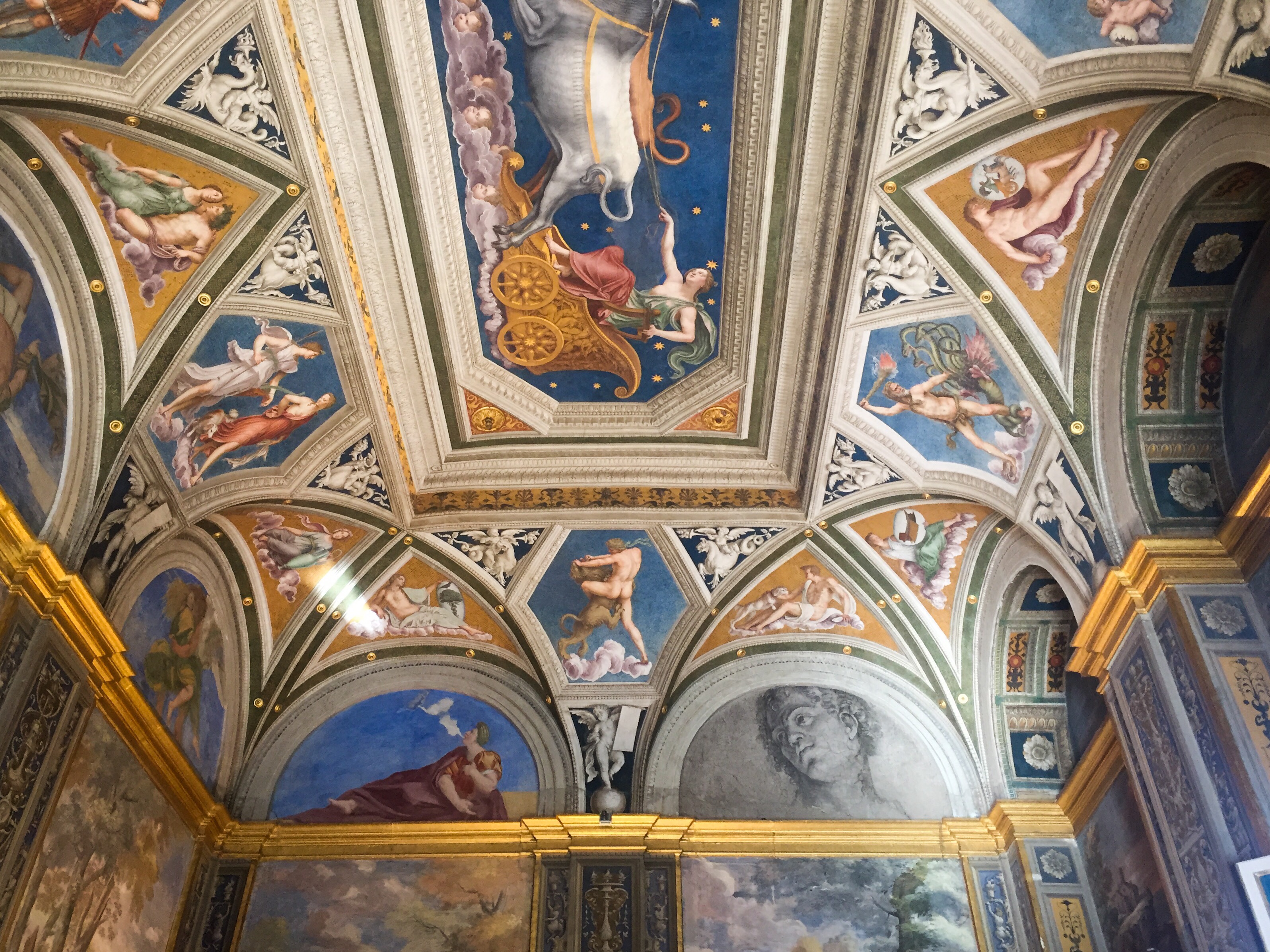
At the Villa Farnesina, I sprung for the audio guide and spent an hour, craning my neck in different rooms in order to understand the legends and lore of what I was looking at. I saw stories of the zodiac signs, the myth of Psyche, and Hercules’s labors preserved in vivid paint.
Early one morning, I went to Piazza di Spagna and enjoyed how the Sun reached the Spanish Steps without obstruction from tourists. I was there to see the French Church Trinita dei Monti for I had read that there were tours at this time; however, after standing in front of its closed doors for ten minutes a priest came out and asked abruptly: “why are you standing here?”. He informed me that my information was wrong and there was no such tour.
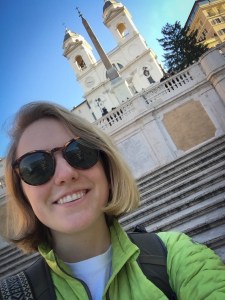
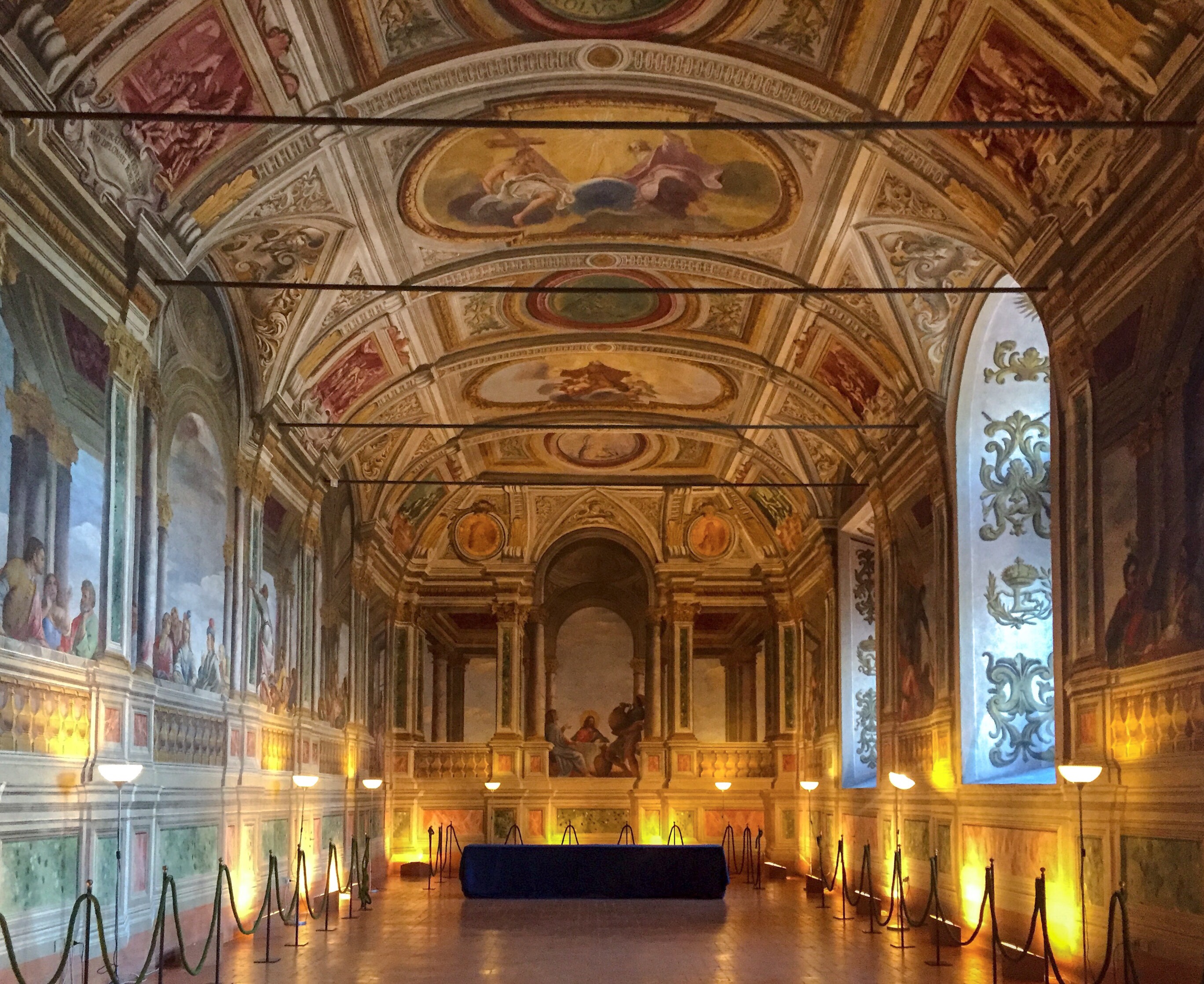
The priest’s name was Pascal and, after some conversation, he offered to show me a prayer chamber and refectory closed to the public. I appreciated the preciousness of being in a private, sacred, and historic space, all alone.
I explored Castel Sant’Angelo late one evening on the first Sunday of the month which, for any historic site in Rome, meant free admission, but also a long line. The castle was constructed as Mausoleum by Hadrian, but in the Middle Ages, it was converted into a fortress. I liked walking up the winding stone stairwell, past trap doors, canons, and eerie Latin inscriptions at night. Near the top, I found a peaceful little nook from which to observe the city. It still felt both known and full of mystery. I can name most of the historic buildings on the landscape, but the extent of their stories remains mysterious.
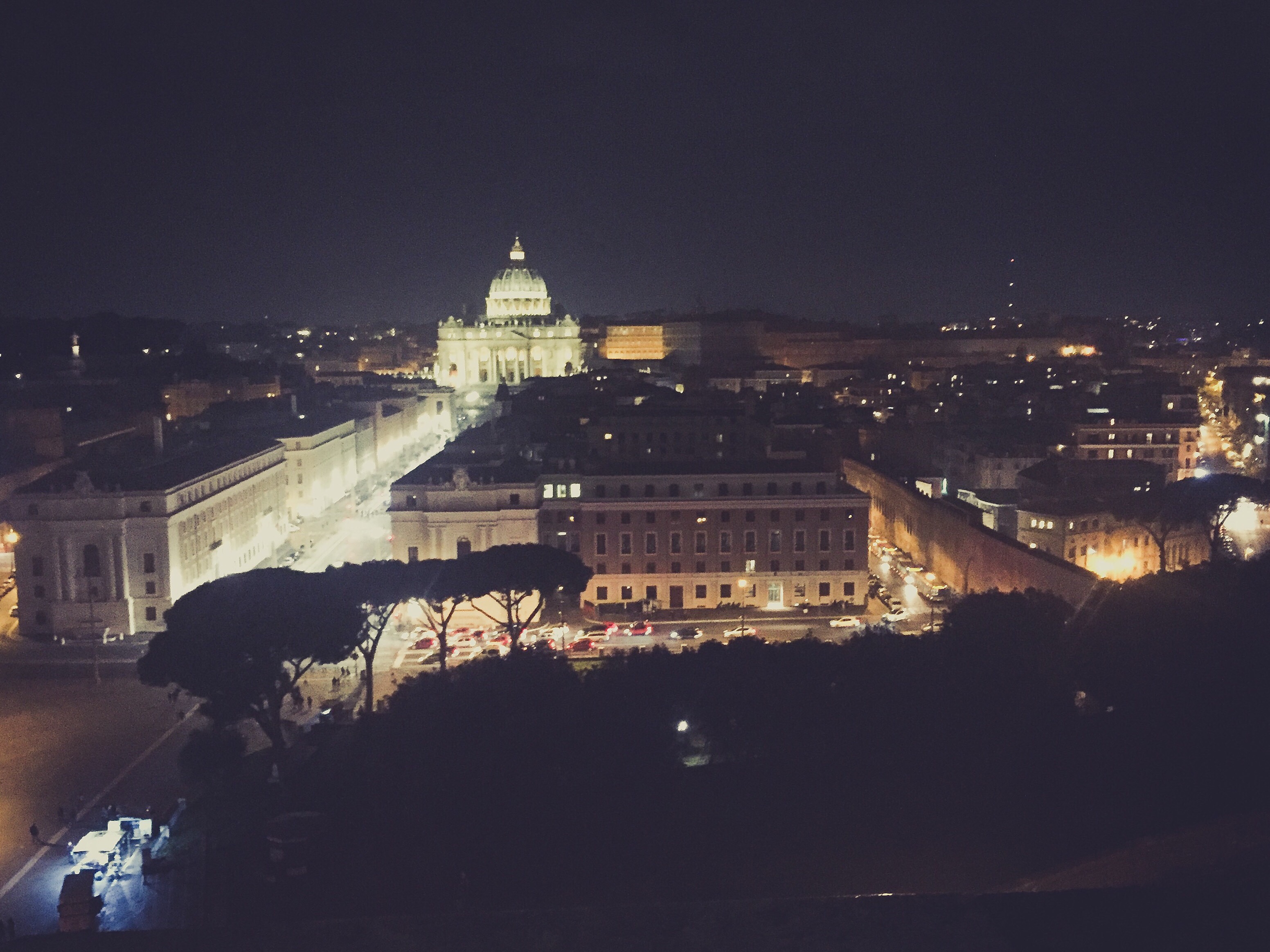
Looking over Rome gives me a similar feeling to the kind I have when I look out at the ocean or into the stars. Its magnificence inspires a sense that I am both very small and connected to greatness; however, unlike the natural splendors of our Earth and the universe, Rome’s greatness is in the context of human history. You walk through its streets and onto an immense human timeline – back through the Renaissance, the Middle Ages, and the Ancient world. Rome is the Eternal City. My returning to it gave me some humbling perspective – that it continues forward with or without me – that my little life is just a little life. And yet, at the same time, its stories of heroes and villains show me the effect that an individual can have. That one ruler, one author, or one artist can change the course of all that is to come.
 Darcy Hughes
Leave a comment